At HV Hoof & Equine Health Products, your animal’s well-being is at the heart of everything we do. Discover our carefully curated range of top-tier health solutions tailored to meet the unique needs of your horses and pets.





Structure
Think of a tendon like a telephone cable consisting of parallel bundles of collagen fibres, arranged longitudinally (Fig 1). Cells called fibroblasts are interspersed between the collagen fibres; their job is to produce new collagen. Collagen has high tensile strength, but limited elasticity.
An elastic layer of connective tissue called the paratendon surrounds the tendon, allowing it to glide freely. Where a tendon crosses over a joint a synovial sheath (tendon sheath) covers it and a supporting band called an annular ligaments help to keep the tendon in the normal position. Blood is supplied to the tendon from neighbouring muscle, bone and also from within the tendon sheath. This blood supply is limited and thus contributes to the poor healing capacity of tendons.
Function
Tendons connect muscle to bone. During muscular activity the force generated by the muscle is transmitted to the tendon and then to the bone, thereby initiating movement.
What Can Go Wrong With Tendons
Tendon pathology can be grouped into two broad categories:
Injury – strain e.g. bowed tendon (tendonitis) – Laceration
Developmental – congenital (born with the defect) – Acquired (usually occurs following trauma)
Strains are the most common cause of tendon injury and occur when a tendon is stretched beyond its capacity. This can be due to a number of reasons:
Foot balance. Overly long toes predispose to injuries as the torque forces on the tendons and ligaments are increased at the start of the stride, just before the foot leaves the ground. Uneven heel lengths may also cause problems, as excess strain may be placed on one side of the leg compared to the other side.
Rough ground can also cause problems for the same reasons as foot imbalances, as extra stress may be placed on certain areas of the leg.
Too much fast work too early on in the training programme can cause problems. As a horse begins work, tendons, ligaments and bones become stronger in response to a gradual increase in stress. When a horse is pushed too hard too fast, its legs do not have time to adapt, consequently the tissues give way to the intense stress.
Some pre-existing injuries such as navicular disease may also lead to tendon injuries as a horse has to alter its gait to avoid the pain.
Overworking a tired horse can also be a risk factor. Tendons have an inherent elasticity which gives them the ability to cope with a strain. As tendons fatigue, the elasticity is lost, and they become more susceptible to stretch and strain. The faster the speed, the further the tendons are stretched and the higher the chance of injury.
Strong pressure directly onto the tendon, such as an overly tight bandage can also cause injury.
Tendon lacerations usually occur either as a result of a leg caught in a fence or from interference. Lacerations can extend through the entire tendon or may partially severe the tendon. It is important to realise that tendon sheaths and/or joints can be opened by laceration trauma. Tendon lacerations are difficult to treat due to their poor rate of healing and because of the large amount of tension placed on the fibres. Infection can also reduce the rate of healing, especially if the tendon sheath is involved. This is complicated by the fact that it is difficult for antibiotics to reach the tendon/tendon sheath due to the poor blood supply. Local flushing with sterile water and antibiotics is usually indicated. The lacerated tendon ends can be sutured together using a strong suture material and supported with a cast. Extensive adhesion formation (scar tissue) can occur thereby limiting the normal gliding motion of the tendon.
Developmental tendon problems are classified as either congenital or acquired. Congenital deformities are present at birth, whereas acquired deformities generally develop during periods of growth. Weak flexor tendons are a relatively common condition in newborn foals, generally the hind limbs are affected. Affected foals walk on their heel bulbs with their toes pointing upwards. This condition usually resolves within a few days. Digital hyperextension is a rare condition and appears as an extreme form of weak flexor tendons. Foals walk on their pasterns. Contracted tendons (flexure deformities) can be congenital or acquired. Acquired flexural deformities occur most commonly in fast growing individuals fed on a high plane of nutrition.
Pain has been implicated as a causative factor in flexural deformities. Pain results in increased tension on the flexor tendons and an altered stance, ultimately leading to flexural deformities as the young horse grows.
Acquired flexural deformities occur most commonly between 3 and 8 months of age. Congenital flexural deformities can be caused by several different factors. Malpositioning within the mare’s uterus can lead to contracted tendons.
Ingestion of toxins during pregnancy can also cause malformations of the tendons. Genetic factors can contribute to deformities of the tendons. Congenital flexural deformities have also been associated with an unbalanced iodine intake in the mare.
What to Look For
Heat, swelling and pain generally indicate that inflammatory changes are occurring within the tendon.
Skin wounds overlying the tendons. Severed tendon(s) can occur with very small skin wounds. Bacteria and debris can contaminate the tendon/tendon sheath leading to infection. It is important to realise that tendon rupture may occur with no skin wound due to external trauma or sudden over-stretching.
Ruptured tendons cause a dramatic change in the conformation of the limb e.g. when the superficial digital flexor tendon is ruptured/severed the fetlock drops dramatically. When the digital extensor tendon is affected knuckling of the fetlock occurs.
Loss of normal range of movement.
Diagnosis
Restriction of Haemorrhage
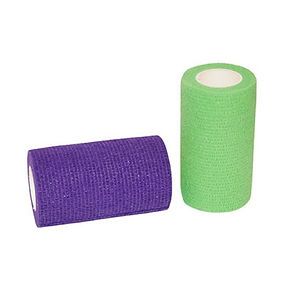
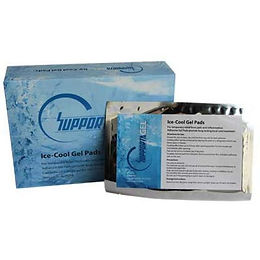
Tendon fibre rupture results in haemorrhage and delivery of inflammatory cells and chemical mediators to the damaged area. This results in increased inflammation and therefore slows the healing time. You can utilise pressure bandages, cold packs or hosing to decrease the amount of haemorrhage.
Reduction of inflammation
Cold packs, hosing and anti-inflammatory treatment (phenylbutazone, DMSO) can aid in reducing inflammation. Intermittent use of cooling techniques seems to be beneficial for 24-48 hours after injury. However, after this period, it appears to be more useful to warm the affected area as this promotes increased blood flow and hence the increased delivery of nutrients required for healing.
The administration of sodium hyaluronate (e.g. ‘Hyonate’) and polysulphated glycosaminoglycans either systemically (intravenous injection) or locally can be used to aid healing by decreasing inflammation and providing supportive components (nutrients).
Rest
It is important to rest the horse to prevent further injury. However, gentle controlled exercise (e.g. hand walking) is essential so as to create tension on the tendon(s). Tension is required for orderly healing of the tendon fibres. Turning a horse out to pasture is one of the biggest mistakes that an owner can make. The horse will be placing undue stresses on the damaged tendon(s) when it trots and canters around the paddock, this can cause irreparable damage e.g. formation of scar tissue, increasing the size of the lesion. The horse must be kept in an enclosed space where it cannot gallop around, this can be a yard or loose box. Hand walking for short periods (15 minutes) for the first month is important as it aids the healing of the tendon fibres. Exercise protocols can be devised by your veterinarian to suit the requirements of your horse.
Decrease wound contamination
It is important to reduce the amount of contamination of open wounds. Wounds can be hosed to remove debris and bacteria. Clean bandages should also be applied to decrease further contamination of the site.
Support
Laceration/rupture of the superficial digital flexor tendon and/or deep digital flexor tendon should be supported in flexion with a rigid device e.g. splint, cast. Conversely, laceration of the digital extensor tendon should be supported in extension. This is beneficial as it reduces the tension placed on the lacerated tendons.
Prevention
There are many risk factors that can increase the incidence of tendon and ligament injuries. Conformation can increase the risk of developing tendonitis. Long sloping pasterns, long toes, over at the knees, and tied in at the knees can increase the forces imposed on the flexor tendons when extreme extension occurs. An important causative factor involved in tendon injuries is the physical conditioning of the horse and the tendon tissue. Resistance to injury increases as fitness improves. Tendon fibres are better able to resist weight-bearing strain overload if they well conditioned. Conditioning can be achieved by slowly introducing horses to an increase in workload. Young horses and those returning to exercise after being turned out are at an increased risk of developing tendon injuries and it is imperative that they are brought into work slowly.
Unfortunately it is difficult to stop your horse getting caught up in the fence, but if you have the choice, number eight wire is a lot safer than high tensile. Number eight wire is thicker, softer and is more likely to stretch, therefore it can help to reduce the severity of the injury. Self induced trauma e.g. overreach injuries, knocking legs, are slightly harder to reduce. Protective boots are worth using on any horse that does hit himself/herself and should be used routinely on young or unbalanced horses which are more likely to knock themselves.